8-Hour Law Enforcement Training | Texas Economic Crimes & Fraud Investigations
Financial fraud, identity theft, forged documents, and sophisticated business email scams present unique challenges for law enforcement investigators. Knowing how to recognize the offense is only the beginning. Building a case that establishes every statutory element, supports an arrest warrant, and is ready for prosecution requires a structured investigative approach.
Introduction to Economic Crimes & Fraud Investigations is an intensive, eight-hour, practitioner-focused course designed to equip law enforcement detectives and financial crimes investigators with a practical, repeatable process for investigating economic crimes under the Texas Penal Code.
This course takes investigators from the initial offense report through the completed criminal investigation, arrest warrant preparation, and case submission to the District Attorney's Office. Rather than simply reviewing criminal statutes, the training emphasizes applying Texas law to the investigative process and developing prosecutable cases.
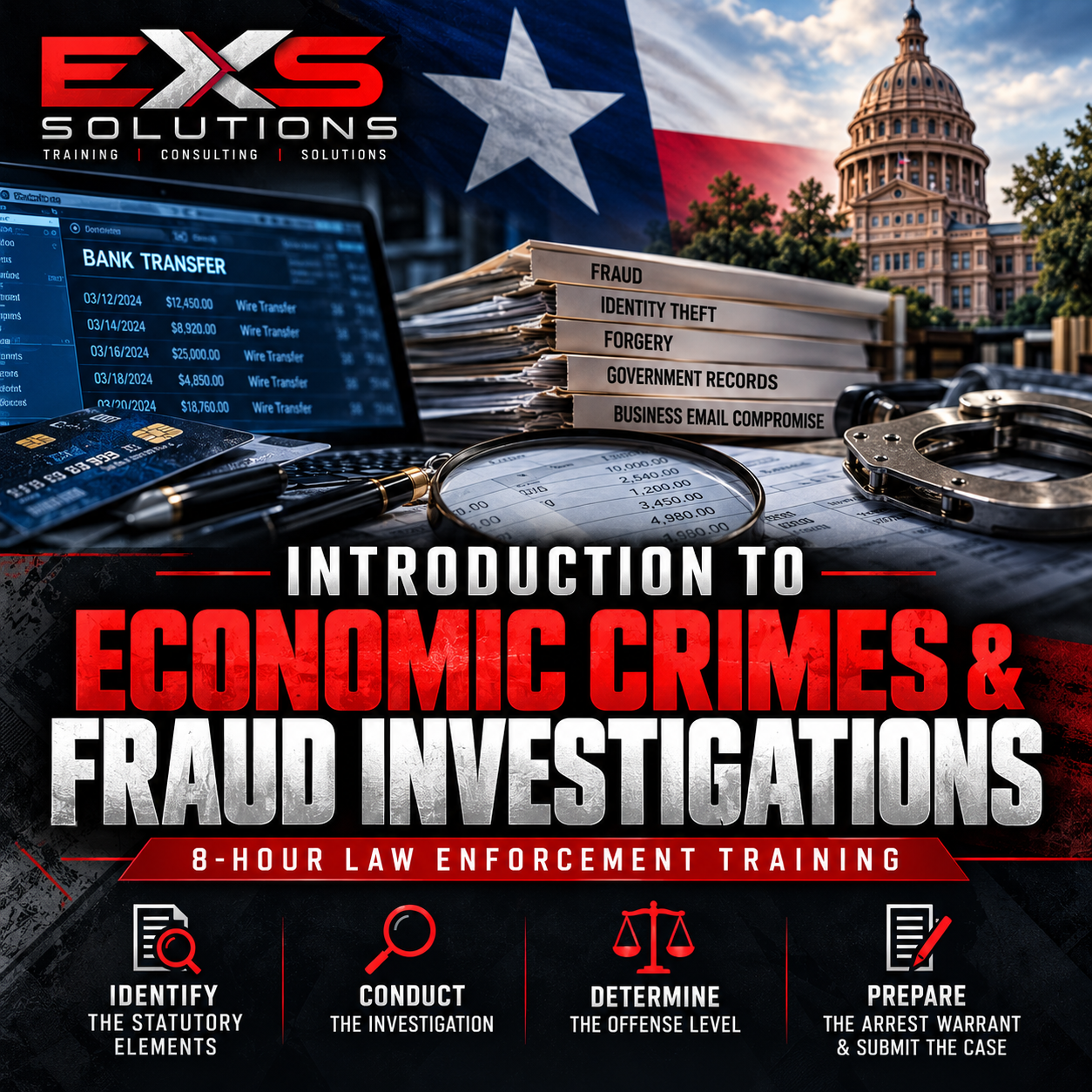
Investigators will learn a consistent, four-step investigative framework that can be applied across multiple financial crimes:
Identify the Statutory Elements – Recognize the applicable Texas Penal Code offense and the legal elements that must be established.
Conduct the Investigation – Apply a structured investigative approach to develop the facts and evidence necessary to support the offense.
Determine the Offense Level – Identify the appropriate criminal offense classification based on Texas law.
Prepare the Arrest Warrant and Submit the Case – Translate investigative findings into an arrest warrant and prepare the completed case for prosecution.
Using this framework, participants will examine investigations involving:
Credit Card Abuse – Investigating criminal offenses involving the misuse of credit cards.
Fraudulent Use or Possession of Identifying Information – Investigating identity theft and unlawful possession or use of personal identifying information.
Forgery – Investigating fraudulent writings and documents under Texas law.
Tampering with a Governmental Record – Identifying and investigating offenses involving government records.
This course is designed for criminal investigators, detectives, financial crimes investigators, fraud investigators, supervisors, and law enforcement officers seeking to strengthen their understanding of economic crime investigations and Texas financial crime statutes.
Economic crime investigations require more than identifying suspicious financial activity. Investigators must understand the applicable law, establish the necessary elements of the offense, determine the correct charge, and present a case that can withstand prosecutorial review.
The goal is simple: Give investigators a practical, repeatable investigative process they can take back to their agencies and immediately apply to economic crime and fraud cases.
Duration: 8 Hours
Course Focus: Economic Crimes, Financial Fraud Investigations, Texas Penal Code, Arrest Warrant Preparation, and Criminal Case Submission