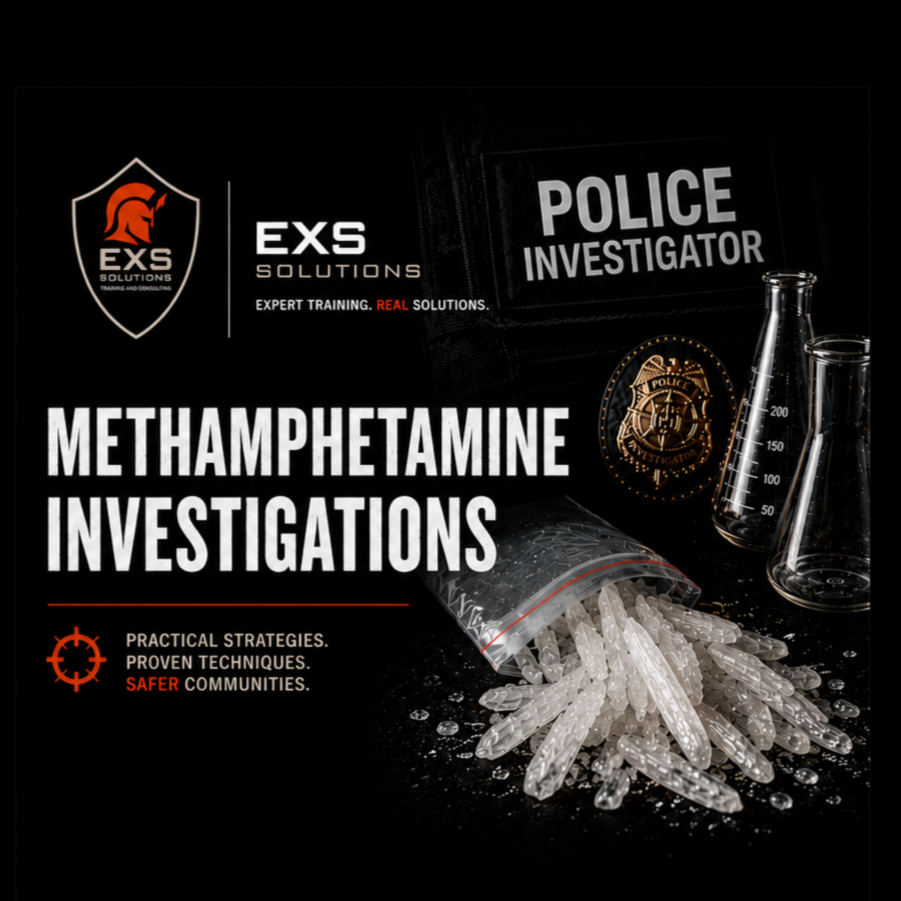
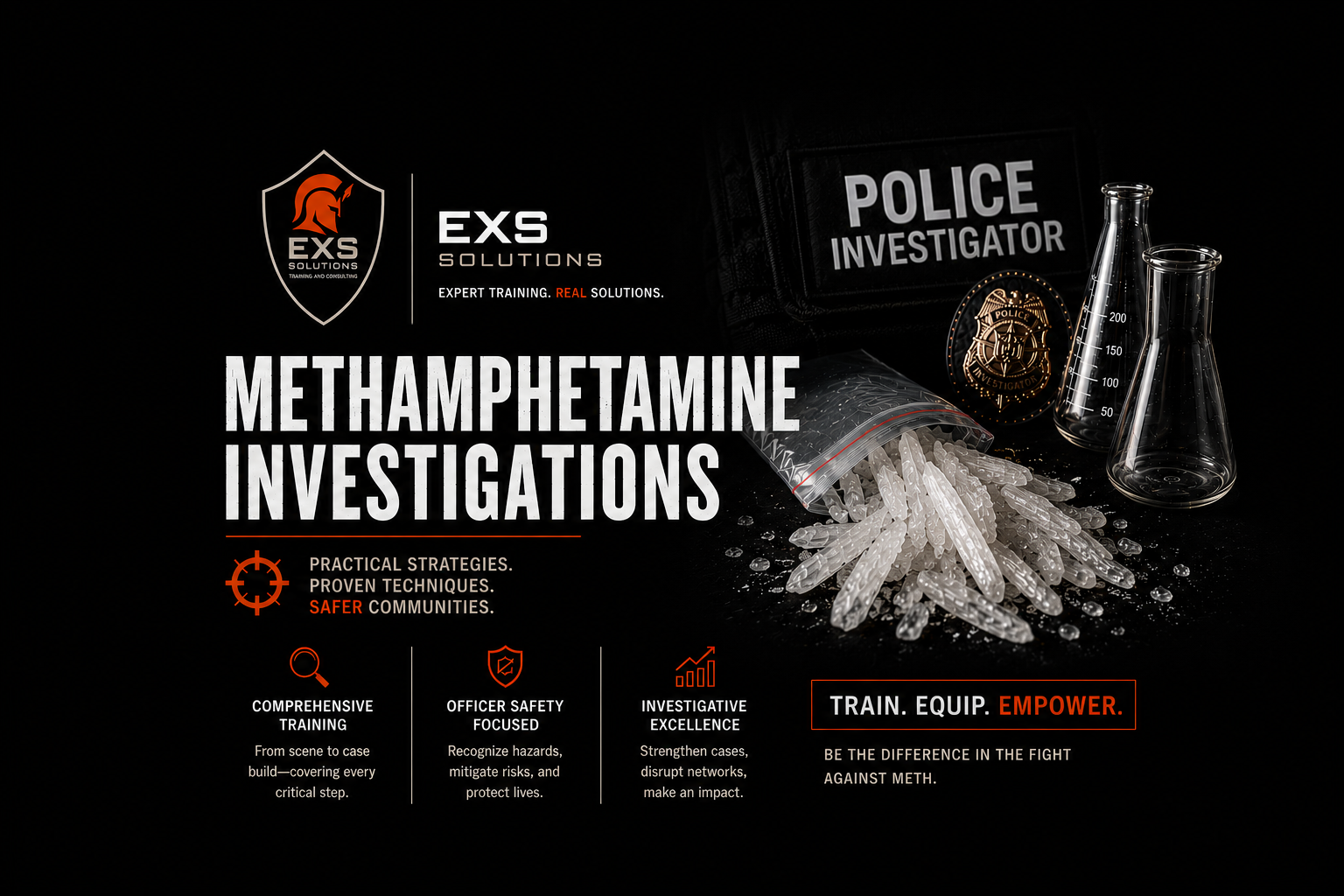
Methamphetamine continues to be one of the most destructive and widely abused narcotics in the United States. For decades, methamphetamine has fueled violent crime, addiction, organized trafficking networks, and transnational criminal operations that impact communities across the country. Cheap to produce, highly addictive, and increasingly pure, modern methamphetamine remains a major challenge for law enforcement at every level.
This intensive 8-hour training course provides law enforcement officers, investigators, narcotics units, and task force personnel with a comprehensive understanding of modern methamphetamine investigations — from street-level enforcement to cartel-connected trafficking organizations.
Students will learn how methamphetamine is produced, trafficked, smuggled, distributed, and sold throughout the United States. The course examines the evolution of methamphetamine production, including the transition from domestic clandestine laboratories to large-scale cartel-controlled production operations in Mexico. Participants will also gain insight into modern trafficking trends, including liquid methamphetamine smuggling and conversion labs used to transform liquid meth back into crystal form after transport.
This course goes beyond basic narcotics enforcement and focuses on real-world investigative strategies used by successful narcotics investigators. Students will learn how to identify trafficking indicators, recognize smuggling techniques, develop intelligence, and work investigations from the street-level dealer upward toward mid-level distributors, stash houses, and cartel-connected supply networks.
Through case studies, investigative examples, and practical investigative concepts, participants will gain a deeper understanding of how modern methamphetamine trafficking organizations operate and how investigators can successfully build prosecutable cases for both state and federal court.
The course also provides a detailed overview of state and federal drug laws related to methamphetamine offenses, including possession, possession for sale, transportation, trafficking, manufacturing, conspiracy investigations, and federal Controlled Substances Act (CSA) violations. Students will explore the differences between state and federal prosecution, understand investigative thresholds that may trigger federal involvement, and learn how to structure investigations for successful prosecution.
Participants will also learn how to properly articulate investigative findings, identify indicators of narcotics sales and trafficking, interpret evidence such as drug ledgers and cell phone communications, and prepare for courtroom testimony related to methamphetamine investigations.
Whether you are a patrol officer encountering methamphetamine during daily enforcement activities or a narcotics investigator developing complex trafficking cases, this course will sharpen your investigative skills and provide practical tools, investigative techniques, and lessons learned from real-world narcotics investigations.
Understanding Methamphetamine and Its Effects
Origins and History & Evolution of Methamphetamine
Crystal Meth Production, Purity & Conversion
Clandestine Labs and Conversion Labs
Methamphetamine Smuggling
Interstate and Cross-Border Trafficking Routes
Cartel-Connected Distribution Networks
Street-Level Methamphetamine Investigations
Developing Cases
Finding Developing and Examination of Evidence
Laws Related to Methamphetamine/ CSA
Federal Drug Trafficking Thresholds
Case Development
Investigative Documentation & Courtroom Testimony
Patrol Officers
Narcotics Investigators
Detectives
Task Force Officers
Gang Investigators
Supervisors
Intelligence Analysts
Prosecutors assigned to narcotics cases
By the end of this course, participants will have a stronger understanding of modern methamphetamine investigations, trafficking trends, cartel operations, smuggling methods, and prosecution strategies. Students will leave with practical investigative knowledge that can immediately be applied in the field to identify trafficking activity, build stronger narcotics cases, and improve courtroom articulation and prosecution success.
Methamphetamine continues to be one of the most destructive and widely abused narcotics in the United States. For decades, methamphetamine has fueled violent crime, addiction, organized trafficking networks, and transnational criminal operations that impact communities across the country. Cheap to produce, highly addictive, and increasingly pure, modern methamphetamine remains a major challenge for law enforcement at every level.
This intensive 8-hour training course provides law enforcement officers, investigators, narcotics units, and task force personnel with a comprehensive understanding of modern methamphetamine investigations — from street-level enforcement to cartel-connected trafficking organizations.
Students will learn how methamphetamine is produced, trafficked, smuggled, distributed, and sold throughout the United States. The course examines the evolution of methamphetamine production, including the transition from domestic clandestine laboratories to large-scale cartel-controlled production operations in Mexico. Participants will also gain insight into modern trafficking trends, including liquid methamphetamine smuggling and conversion labs used to transform liquid meth back into crystal form after transport.
This course goes beyond basic narcotics enforcement and focuses on real-world investigative strategies used by successful narcotics investigators. Students will learn how to identify trafficking indicators, recognize smuggling techniques, develop intelligence, and work investigations from the street-level dealer upward toward mid-level distributors, stash houses, and cartel-connected supply networks.
Through case studies, investigative examples, and practical investigative concepts, participants will gain a deeper understanding of how modern methamphetamine trafficking organizations operate and how investigators can successfully build prosecutable cases for both state and federal court.
The course also provides a detailed overview of state and federal drug laws related to methamphetamine offenses, including possession, possession for sale, transportation, trafficking, manufacturing, conspiracy investigations, and federal Controlled Substances Act (CSA) violations. Students will explore the differences between state and federal prosecution, understand investigative thresholds that may trigger federal involvement, and learn how to structure investigations for successful prosecution.
Participants will also learn how to properly articulate investigative findings, identify indicators of narcotics sales and trafficking, interpret evidence such as drug ledgers and cell phone communications, and prepare for courtroom testimony related to methamphetamine investigations.
Whether you are a patrol officer encountering methamphetamine during daily enforcement activities or a narcotics investigator developing complex trafficking cases, this course will sharpen your investigative skills and provide practical tools, investigative techniques, and lessons learned from real-world narcotics investigations.
Understanding Methamphetamine and Its Effects
Origins and History & Evolution of Methamphetamine
Crystal Meth Production, Purity & Conversion
Clandestine Labs and Conversion Labs
Methamphetamine Smuggling
Interstate and Cross-Border Trafficking Routes
Cartel-Connected Distribution Networks
Street-Level Methamphetamine Investigations
Developing Cases
Finding Developing and Examination of Evidence
Laws Related to Methamphetamine/ CSA
Federal Drug Trafficking Thresholds
Case Development
Investigative Documentation & Courtroom Testimony
Patrol Officers
Narcotics Investigators
Detectives
Task Force Officers
Gang Investigators
Supervisors
Intelligence Analysts
Prosecutors assigned to narcotics cases
By the end of this course, participants will have a stronger understanding of modern methamphetamine investigations, trafficking trends, cartel operations, smuggling methods, and prosecution strategies. Students will leave with practical investigative knowledge that can immediately be applied in the field to identify trafficking activity, build stronger narcotics cases, and improve courtroom articulation and prosecution success.