
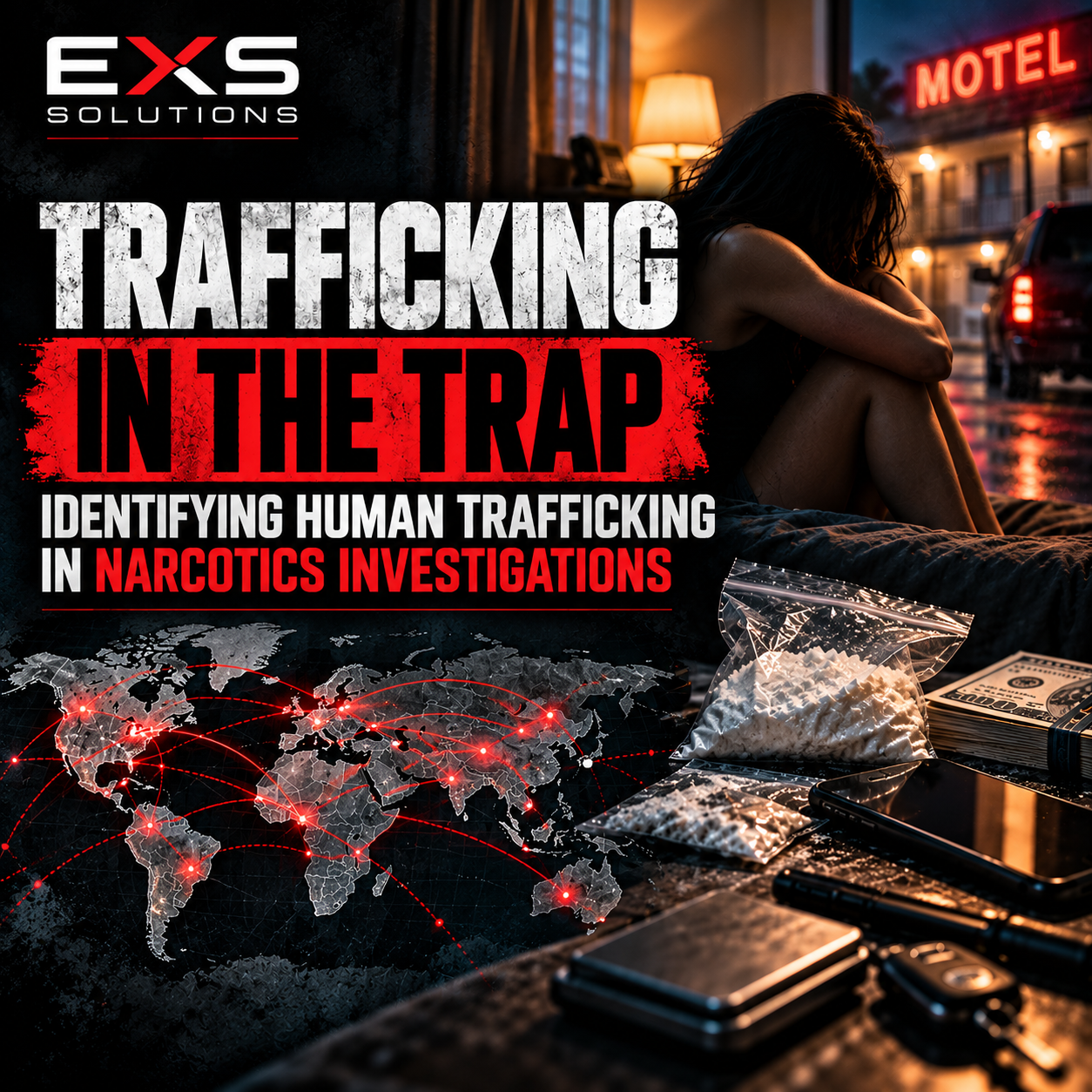
Trafficking in the Trap- Identifying Human Trafficking in Narcotics Investigations
This comprehensive two-day course prepares law enforcement professionals to recognize and investigate human trafficking hidden within the drug world. Traffickers and drug organizations share the same routes, stash houses, motels, phones, and money, and narcotics investigators are often standing in the middle of a trafficking operation without realizing it. Through expert instruction, real-world case studies, and a hands-on capstone investigation, participants will gain the knowledge and skills to identify victims, apply federal and Texas trafficking statutes, and build strong, prosecutable trafficking cases directly from their drug investigations.
What You'll Learn
· Understanding what human trafficking is and what it is not under federal law and the Texas Penal Code.
· Recognizing how drug trafficking and human trafficking intertwine: drugs as a tool of coercion and control, victims forced into drug crimes, and shared criminal infrastructure.
· Identifying trafficking indicators during traffic stops, search warrants, overdose responses, informant debriefs, and digital investigations.
· Distinguishing trafficking victims from offenders, including victims compelled to commit drug offenses.
· Conducting victim-centered, trauma-informed contacts and interviews that protect both the victim and the case.
· Building and corroborating trafficking cases with digital, financial, and physical evidence and selecting the right federal and state charges.
Training Approach
· Day 1: Focuses on foundational knowledge — the definitions and dynamics of sex and labor trafficking, victimology and trauma, the federal statutory framework, Texas Penal Code Chapter 20A and companion statutes (including the latest legislative updates), and an in-depth examination of how drug operations and trafficking operations overlap.
· Day 2: Emphasizes hands-on investigative application. Students will learn to spot trafficking at the five most common narcotics contact points, conduct trauma-informed victim interviews, convert indicators into admissible evidence, run parallel drug and trafficking case tracks, and work through a full capstone case file that begins as a routine narcotics investigation and ends with trafficking charges.
Course Highlights
· Real-world case studies and best practices from experienced investigators.
· Emphasis on trauma-informed response and victim identification — including victims controlled through addiction.
· Practical instruction on both federal statutes and the Texas Penal Code, with current legislative updates.
· Practical guidance on digital evidence, financial records, and modern trafficking trends.
Takeaway Upon completion, participants will have a clear understanding of how human trafficking operates inside the drug trade and how to investigate it. Officers will leave equipped with the tools and confidence to identify hidden victims, hold traffickers accountable, and turn routine narcotics cases into successful trafficking prosecutions.
This comprehensive two-day course prepares law enforcement professionals to recognize and investigate human trafficking hidden within the drug world. Traffickers and drug organizations share the same routes, stash houses, motels, phones, and money, and narcotics investigators are often standing in the middle of a trafficking operation without realizing it. Through expert instruction, real-world case studies, and a hands-on capstone investigation, participants will gain the knowledge and skills to identify victims, apply federal and Texas trafficking statutes, and build strong, prosecutable trafficking cases directly from their drug investigations.
What You'll Learn
· Understanding what human trafficking is and what it is not under federal law and the Texas Penal Code.
· Recognizing how drug trafficking and human trafficking intertwine: drugs as a tool of coercion and control, victims forced into drug crimes, and shared criminal infrastructure.
· Identifying trafficking indicators during traffic stops, search warrants, overdose responses, informant debriefs, and digital investigations.
· Distinguishing trafficking victims from offenders, including victims compelled to commit drug offenses.
· Conducting victim-centered, trauma-informed contacts and interviews that protect both the victim and the case.
· Building and corroborating trafficking cases with digital, financial, and physical evidence and selecting the right federal and state charges.
Training Approach
· Day 1: Focuses on foundational knowledge — the definitions and dynamics of sex and labor trafficking, victimology and trauma, the federal statutory framework, Texas Penal Code Chapter 20A and companion statutes (including the latest legislative updates), and an in-depth examination of how drug operations and trafficking operations overlap.
· Day 2: Emphasizes hands-on investigative application. Students will learn to spot trafficking at the five most common narcotics contact points, conduct trauma-informed victim interviews, convert indicators into admissible evidence, run parallel drug and trafficking case tracks, and work through a full capstone case file that begins as a routine narcotics investigation and ends with trafficking charges.
Course Highlights
· Real-world case studies and best practices from experienced investigators.
· Emphasis on trauma-informed response and victim identification — including victims controlled through addiction.
· Practical instruction on both federal statutes and the Texas Penal Code, with current legislative updates.
· Practical guidance on digital evidence, financial records, and modern trafficking trends.
Takeaway Upon completion, participants will have a clear understanding of how human trafficking operates inside the drug trade and how to investigate it. Officers will leave equipped with the tools and confidence to identify hidden victims, hold traffickers accountable, and turn routine narcotics cases into successful trafficking prosecutions.